
Retrasa la necesidad de diálisis peritoneal o hemodiálisis.
Dirokad es una mezcla de sales electrolíticas y un catártico que se toma por vía oral. Ayuda a eliminar toxinas urémicas a través del tracto digestivo en pacientes con insuficiencia renal en etapa 5.
Cada sobre se disuelve en un litro de agua purificada tibia y se bebe de forma progresiva.
A su paso por el tracto digestivo, la solución permite el intercambio de moléculas entre la sangre y el líquido.
Las sustancias de desecho se eliminan mediante una diarrea osmótica controlada.
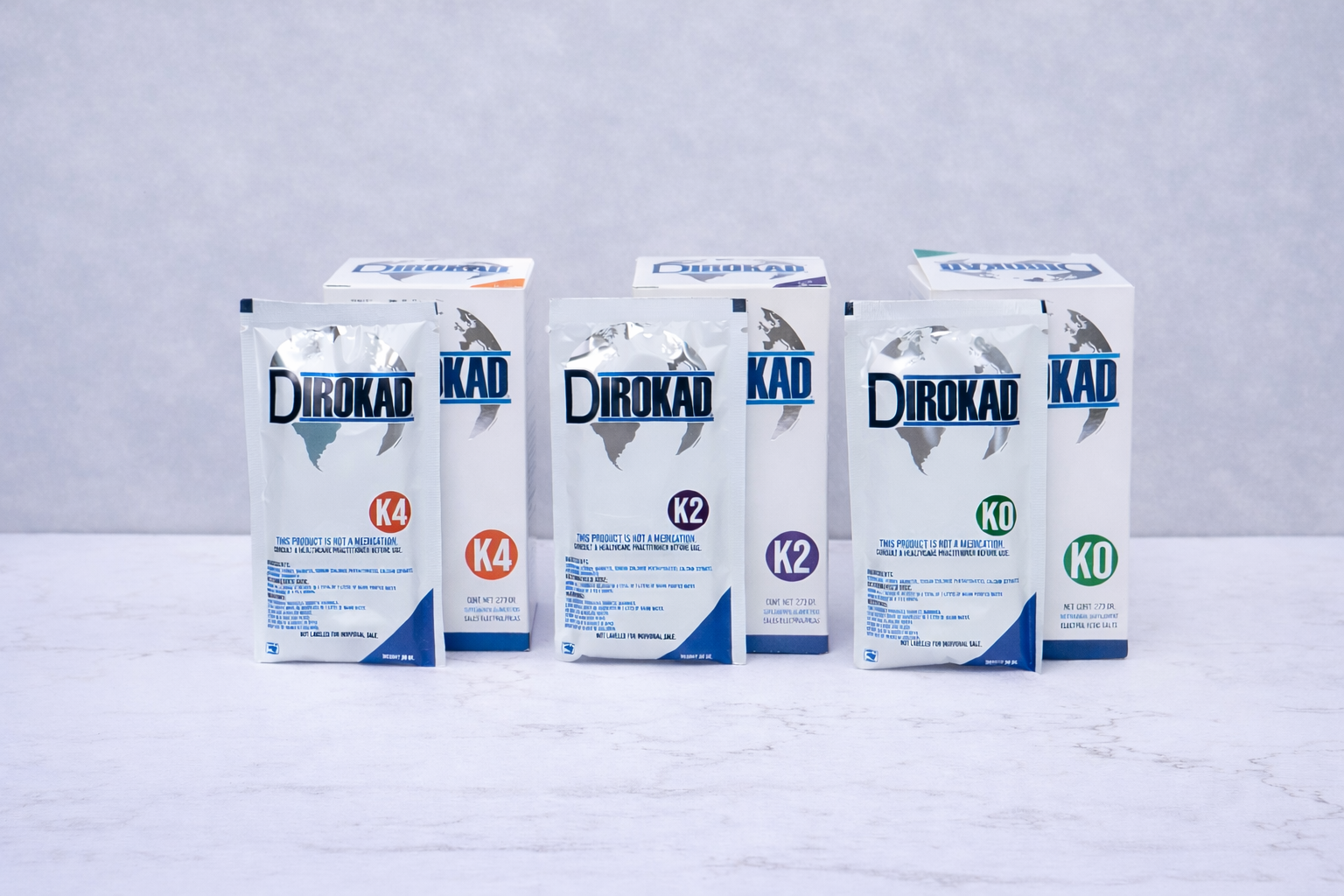
Elige según el nivel de potasio
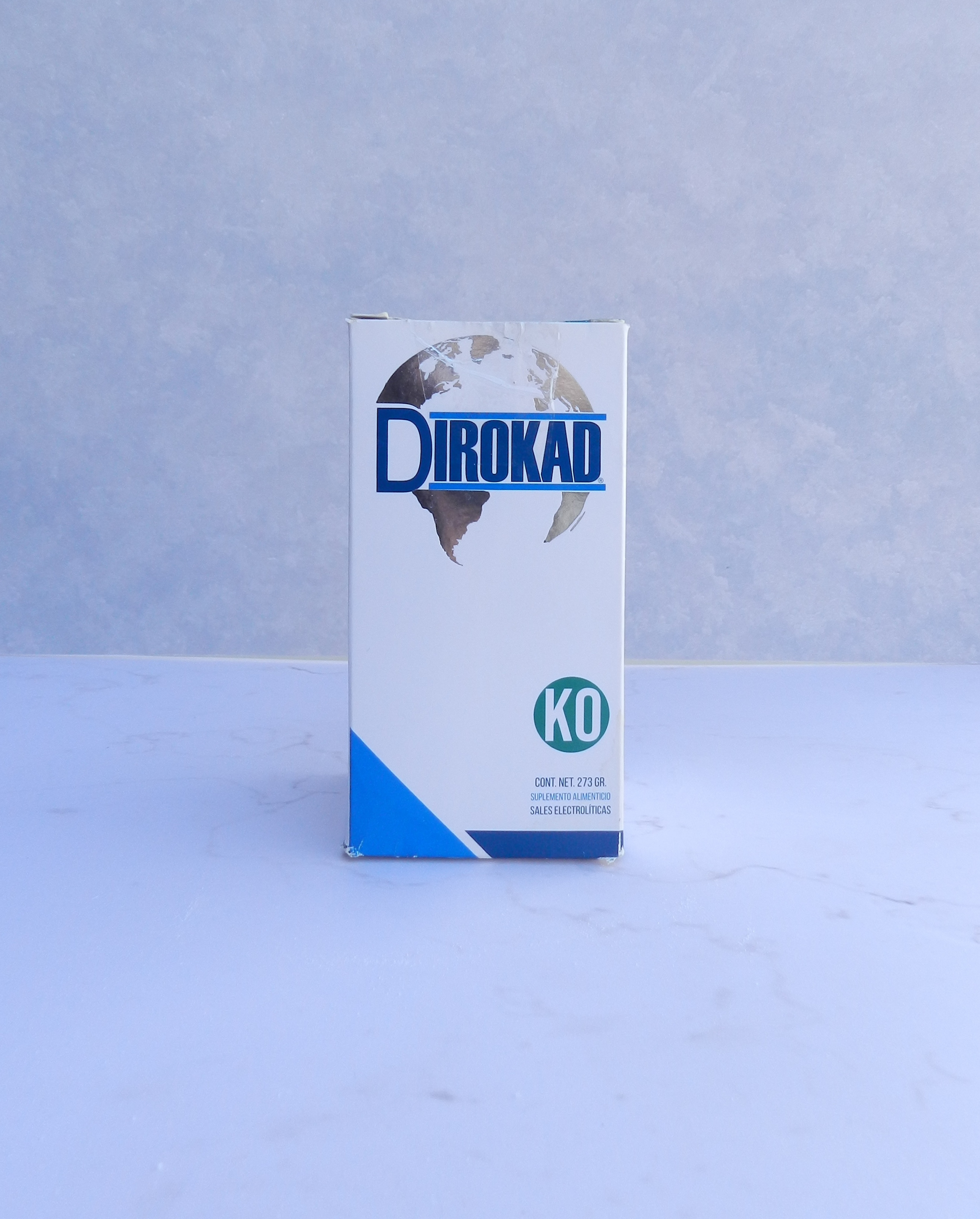
Indicado cuando existe hiperkalemia (potasio elevado en sangre).
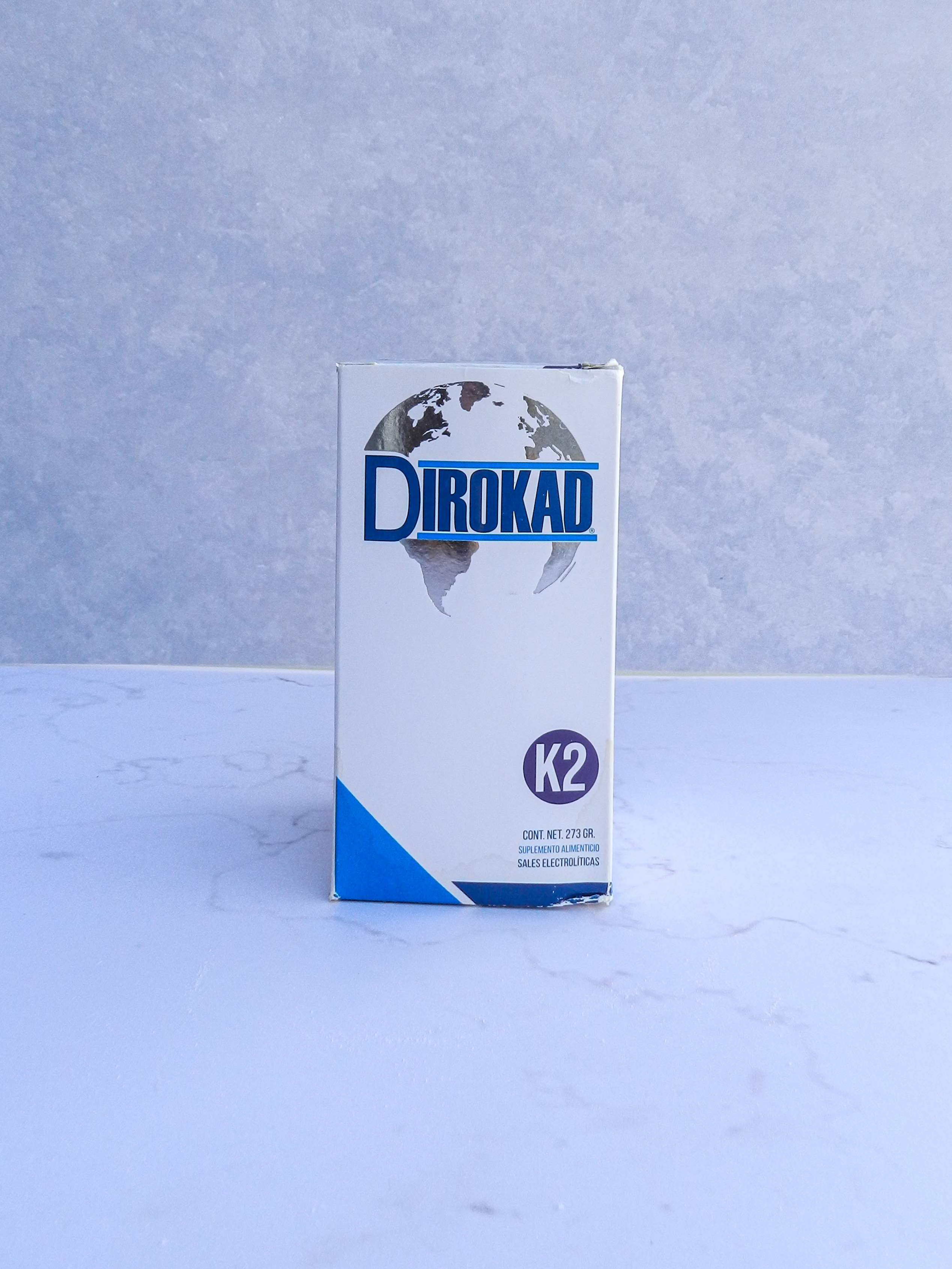
Para pacientes con potasio en rango intermedio, según indicación médica.
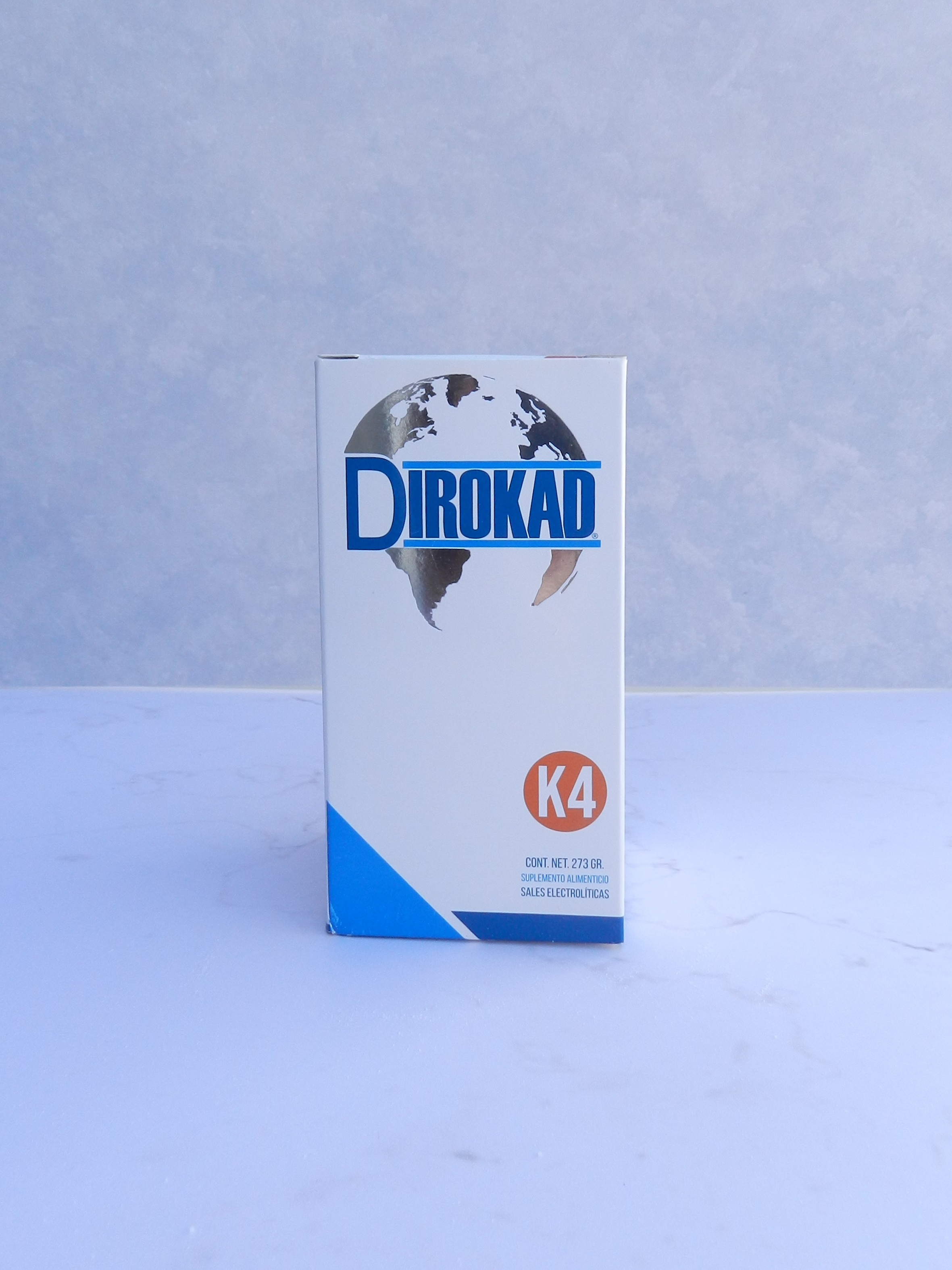
Indicado cuando el nivel de potasio es normal.

Se prepara y se toma en casa
- 01Disuelve cada uno de los 7 sobres en un litro de agua purificada tibia.
- 02Bebe los 7 litros por vía oral en un periodo de 4 a 5 horas.
- 03Sigue la frecuencia indicada por tu nefrólogo.
Una alternativa oral para retrasar la diálisis.
Dirokad es una mezcla de sales electrolíticas que ayuda a retrasar el inicio de la diálisis peritoneal o la hemodiálisis y a reducir los síntomas que afectan a las personas con insuficiencia renal.
El procedimiento se conoce como diálisis gastrointestinal. En lugar de filtrar la sangre con una máquina, utiliza el tracto digestivo como superficie de intercambio entre la sangre y una solución electrolítica que el paciente bebe.
Se toma por vía oral, en casa o en cualquier lugar, sin equipo médico.
¿Cómo funciona, paso a paso?
El paciente bebe la solución electrolítica preparada con los 7 sobres.
La solución pasa por el tracto digestivo durante varias horas.
Moléculas y átomos pasan de la sangre al líquido intestinal, y los electrolitos pasan en sentido inverso.
Los desechos salen del cuerpo mediante una diarrea osmótica controlada.
¿Para quién es?
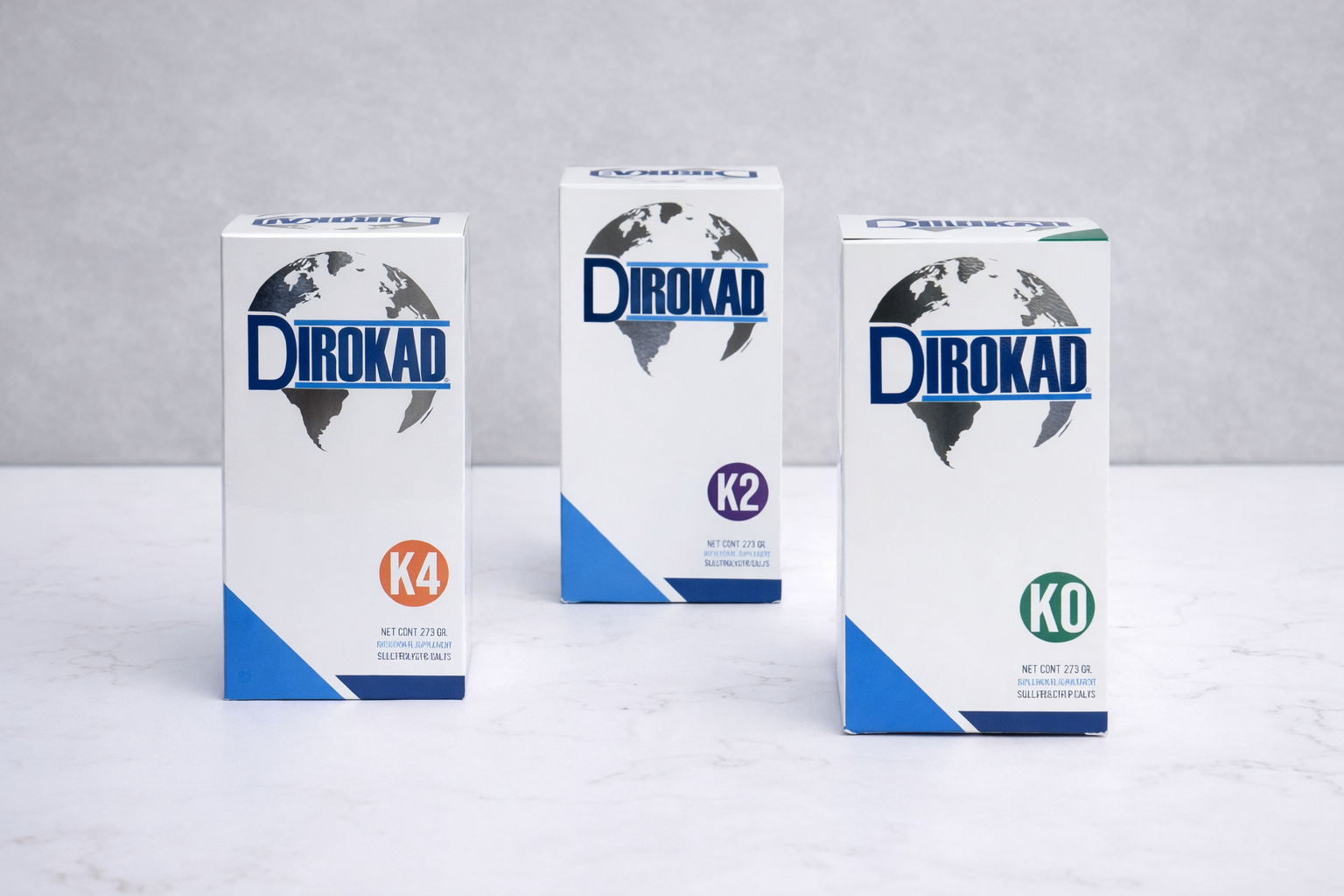
Tres fórmulas según el nivel de potasio
Todas las presentaciones comparten el mismo modo de uso. La diferencia está en el contenido de potasio, que el médico elige según los análisis del paciente.
Comparativa
¿Cómo tomar Dirokad?
Ten listos 7 litros de agua purificada tibia.
Vacía el primer sobre en un litro de agua purificada tibia y bébelo en aproximadamente 60 minutos.
Disuelve cada uno de los 6 sobres restantes en un litro de agua tibia y tómalo en unos 30 minutos, hasta terminar la caja (4 a 5 horas en total). La diarrea osmótica comenzara entre el primer y segundo litro.
La frecuencia la define tu médico; se recomienda máximo, una vez por semana.
La solución produce una diarrea osmótica controlada. Suele comenzar entre el primer y el segundo sobre; si no ocurre, comunícate con tu médico. Planea la toma en un lugar con acceso a un baño y consulta siempre a tu médico.
Para pacientes adultos: los 7 sobres de una caja, diluidos en un total de 7 litros de agua purificada tibia, en un lapso de 4 a 5 horas. Se recomienda máximo una vez por semana, según indique tu médico.
Para profesionales de la salud
Fichas técnicas y datos de referencia del producto.
Datos del producto
¿Qué es la diálisis gastrointestinal?
Dirokad puede considerarse un proceso de diálisis gastrointestinal: se hace pasar por el tubo digestivo una solución electrolítica con un catártico que disminuye los elementos nitrogenados de la sangre y alivia las molestias causadas por las toxinas urémicas responsables del síndrome urémico.
El intercambio ocurre por gradiente-tiempo entre la sangre y el líquido circulante, igual que lo hacen las membranas del peritoneo en la diálisis peritoneal o el filtro sintético en la hemodiálisis. La diferencia es que no requiere cirugía, catéteres ni accesos vasculares: solo tomas orales.
Esta alternativa surge de revisar cómo se trataba a los enfermos renales en el siglo XX. Desde 1950 el intestino se usó para tratar la insuficiencia renal con el nombre de diálisis intestinal (Hamburger, 1968), hasta que lo desplazaron los catéteres de diálisis peritoneal y hemodiálisis.
¿Cómo actúa en el intestino?
Solutos que el intestino elimina al día en un paciente urémico, más de lo que elimina un riñón sano en 24 horas (Sparks, 1979). El tracto digestivo del adulto mide cerca de 5 metros y, por sus pliegues y vellosidades, ofrece una superficie de intercambio muy amplia (Netter, 1962).
Ventajas frente a la diálisis convencional
Más de un siglo de investigación
- {{ b }}
Contacto
Preguntas frecuentes
{{ g.title }}
{{ f.q }}
{{ f.sign }}{{ f.a }}
¿No encontraste tu respuesta?
Escríbenos y un especialista te responderá.
WhatsApp 33 3815 9371Ver información técnica →Ficha técnica Dirokad {{ fi.code }}
Información del empaque y datos nutrimentales de cada presentación.
{{ fi.ind }}
Para pacientes adultos: tomar los 7 sobres diluidos en un total de 7 litros de agua purificada tibia, en un tiempo de 4 a 5 horas.
El contenido de la caja debe diluirse en un total de 7 litros de agua purificada tibia y tomarse en un tiempo de 4 a 5 horas. La diarrea comenzará entre el primer y el segundo sobre. Si esto no sucede, comuníquese con su médico.
Este producto no es un medicamento y no está diseñado para prevenir, diagnosticar, tratar o curar ninguna enfermedad. El consumo de este producto es responsabilidad de quien lo recomienda y de quien lo consume.
Intención de uso: Auxiliar en el tratamiento de la insuficiencia renal.
Hecho en México. Distribuido por Industrias Terov S.A. de C.V., Guadalajara, Jalisco, C.P. 44130.
¿Eres médico o paciente? Habla con un especialista.
WhatsApp 33 3815 9371Este producto no es un medicamento y no está diseñado para prevenir, diagnosticar, tratar o curar ninguna enfermedad. Su consumo es responsabilidad de quien lo recomienda y de quien lo consume.
Delay the need for peritoneal dialysis or hemodialysis.
Dirokad is a blend of electrolyte salts and a cathartic taken by mouth. It helps remove uremic toxins through the digestive tract in patients with stage 5 kidney failure.
Each sachet is dissolved in one liter of warm purified water and taken gradually.
As it passes through the digestive tract, the solution allows molecules to be exchanged between the blood and the fluid.
Waste substances are eliminated through controlled osmotic diarrhea.
Choose by potassium level
Indicated when there is hyperkalemia (high blood potassium).
For patients with potassium in the intermediate range, as directed by a physician.
Indicated when potassium levels are normal.
Prepared and taken at home
- 01Dissolve each of the 7 sachets in one liter of warm purified water.
- 02Drink the 7 liters by mouth over 4 to 5 hours.
- 03Follow the frequency indicated by your nephrologist.
An oral alternative to delay dialysis.
Dirokad is a blend of electrolyte salts that helps delay the start of peritoneal dialysis or hemodialysis and reduce the symptoms that affect people with kidney failure.
The procedure is known as gastrointestinal dialysis. Instead of filtering the blood with a machine, it uses the digestive tract as an exchange surface between the blood and an electrolyte solution the patient drinks.
It is taken by mouth, at home or anywhere, with no medical equipment.
How does it work, step by step?
The patient drinks the electrolyte solution prepared with the 7 sachets.
The solution passes through the digestive tract for several hours.
Molecules and atoms move from the blood into the intestinal fluid, and electrolytes move in the opposite direction.
Waste leaves the body through controlled osmotic diarrhea.
Who is it for?
Three formulas by potassium level
All presentations share the same directions for use. The difference is the potassium content, which the physician chooses based on the patient's lab results.
Comparison
How to take Dirokad?
Have 7 liters of warm purified water ready.
Empty the first sachet into one liter of warm purified water and drink it over about 60 minutes.
Dissolve each of the remaining 6 sachets in one liter of warm water and drink it over about 30 minutes, until the box is finished (4 to 5 hours in total). Osmotic diarrhea will begin between the first and second liter.
Your doctor sets the frequency; no more than once a week is recommended.
The solution produces controlled osmotic diarrhea. It usually begins between the first and second sachet; if it does not, contact your doctor. Plan the intake somewhere with access to a bathroom and always consult your doctor.
For adult patients: the 7 sachets in one box, diluted in a total of 7 liters of warm purified water, over 4 to 5 hours. No more than once a week is recommended, as your doctor indicates.
For healthcare professionals
Data sheets and product reference data.
Product data
What is gastrointestinal dialysis?
Dirokad can be considered a gastrointestinal dialysis process: an electrolyte solution with a cathartic is passed through the digestive tract, lowering nitrogenous compounds in the blood and relieving the discomfort caused by the uremic toxins responsible for uremic syndrome.
The exchange occurs by time gradient between the blood and the circulating fluid, just as the peritoneal membranes do in peritoneal dialysis or the synthetic filter does in hemodialysis. The difference is that it requires no surgery, catheters or vascular access: only oral intake.
This alternative comes from reviewing how kidney patients were treated in the 20th century. From 1950 the intestine was used to treat kidney failure under the name intestinal dialysis (Hamburger, 1968), until it was replaced by peritoneal dialysis and hemodialysis catheters.
How does it act in the intestine?
Solutes the intestine eliminates per day in a uremic patient, more than a healthy kidney eliminates in 24 hours (Sparks, 1979). The adult digestive tract is about 5 meters long and, thanks to its folds and villi, offers a very large exchange surface (Netter, 1962).
Advantages over conventional dialysis
More than a century of research
- {{ b }}
Contact
Frequently asked questions
{{ g.title }}
{{ f.q }}
{{ f.sign }}{{ f.a }}
Didn't find your answer?
Write to us and a specialist will reply.
WhatsApp 33 3815 9371See technical information →Data sheet Dirokad {{ fi.code }}
Packaging information and nutrition facts for each presentation.
{{ fi.ind }}
For adult patients: drink all 7 sachets diluted in a total of 7 liters of warm purified water, over a period of 4 to 5 hours.
The contents of the box must be dissolved in 7 liters of warm purified water and taken over a 4 to 5 hour period. Osmotic diarrhea will begin between the first and the second sachet; if not, please contact your doctor.
This product is not a medication and is not designed to prevent, diagnose, treat or cure any disease. The consumption of this product is the responsibility of the one who recommends or uses it.
Intended use: Auxiliary in the treatment of kidney disease.
Made in Mexico. Distributed by Industrias Terov S.A. de C.V., Guadalajara, Jalisco, C.P. 44130.
Are you a physician or a patient? Talk to a specialist.
WhatsApp 33 3815 9371This product is not a medication and is not intended to prevent, diagnose, treat or cure any disease. Its use is the responsibility of whoever recommends it and whoever consumes it.